Reach in Practice: What Real-World Ticket Distribution Looks Like


By Matthew Breen, Sales Director, Line-Up
In the first two posts in this series, we argued that ticket distribution outside the West End is fragmented, and explored what a ticket distribution platform should actually look like. Now it's time to see that model in action.
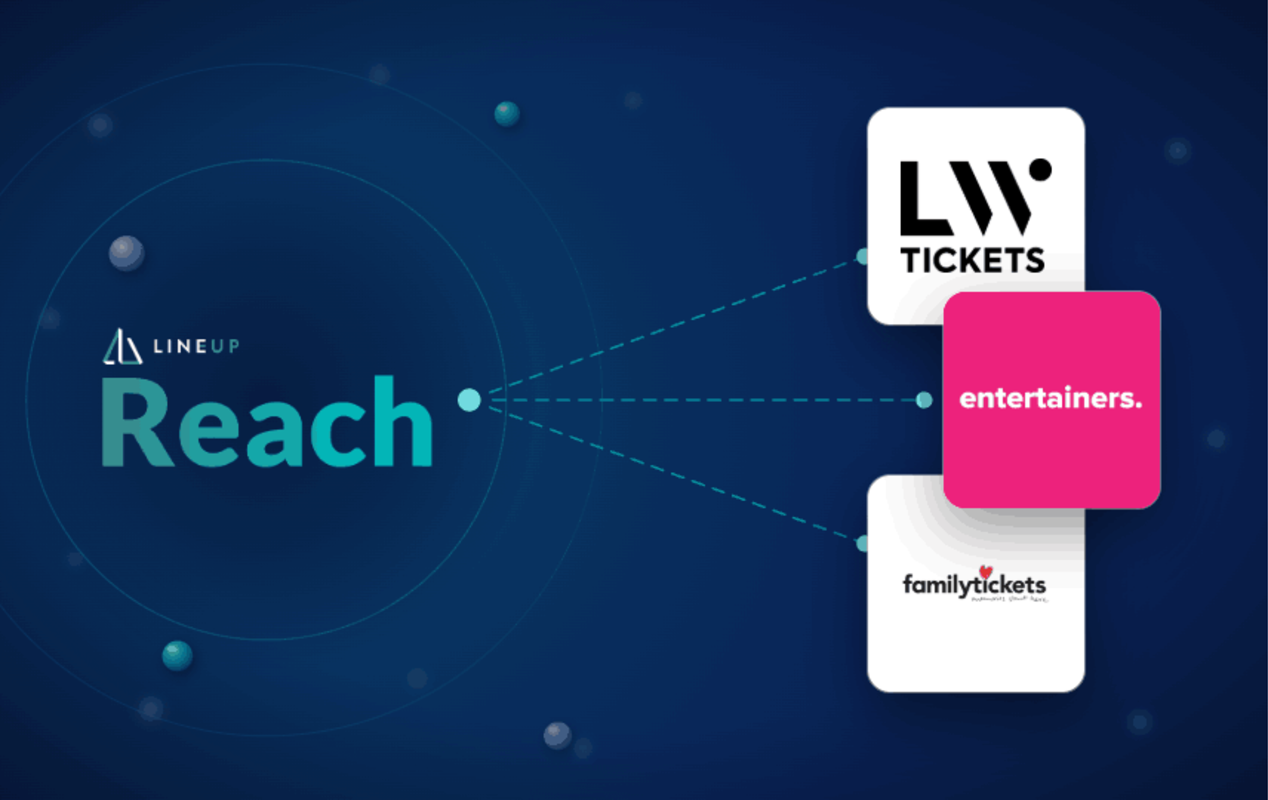
Reach has already been powering distribution for some of the biggest names in live entertainment, and in the process three distinct categories of sellers have emerged.
Venue Groups and Ticketing-as-a-Service (TaaS): LW Tickets
For venue groups, ticket distribution looks like this: LW Theatres operates six of the West End's most prominent venues, including the London Palladium, Theatre Royal Drury Lane and Cambridge Theatre. In 2025, it launched LW Tickets, a consumer-facing ticketing brand selling across its own venues and beyond.
The challenge was straightforward: not every show LW Tickets wants to sell sits on its own ticketing platform. With Reach, it doesn't need to. Inventory from third-party systems is pulled into the same platform as its own venue inventory and sold through a single branded checkout. The customer sees one experience. Behind the scenes, LW Tickets manages everything from one dashboard, with all customer data flowing into one CRM.
This is what ticketing-as-a-service looks like in practice. A venue group taking the infrastructure, expertise and audience relationships it has built for its own venues and extending them outward, selling for others without compromising its brand or its control over the customer journey.
Touring Producers: Entertainers
Entertainers produce more than 2,500 shows a year across 400+ venues. In 2024, they built entertainers.tickets on Line-Up - bringing ticketing in-house, owning their customer data, and running conversion-led marketing campaigns at scale. The results: 1,500+ shows ticketed, 10 million+ website visits, and measurable ROAS for the first time.
For every show at a venue where they didn't hold inventory directly, the process was still manual. Negotiate the allocation > Block off seats > Sell > Monitor Inventory > Request top-up or return unsold stock > Reconcile. Repeat - across every venue.
Since connecting to those venues via Reach, that workflow is replaced almost entirely. Entertainers can connect directly to venue ticketing systems via their APIs and events and availability pull in automatically. They set their own pricing and promotions, sell through their branded entertainers.tickets checkout flow, and every transaction syncs back to the venue's system in real time. They have already connected 56 of their venue partners via Reach, with more being added continuously.
Many venues are understandably protective of their audiences and data. In practice, though, Entertainers have found venue partners to be highly receptive. The setup requires minimal effort, reporting remains accurate, and the additional distribution drives sales that might not otherwise have happened.
Niall Sanderson, Operations Director at Entertainers, frames it this way: "We're not trying to replace venue box offices - the goal is to increase occupancy, to the benefit of both ourselves and the venues."
Agents and Brands: Family Tickets
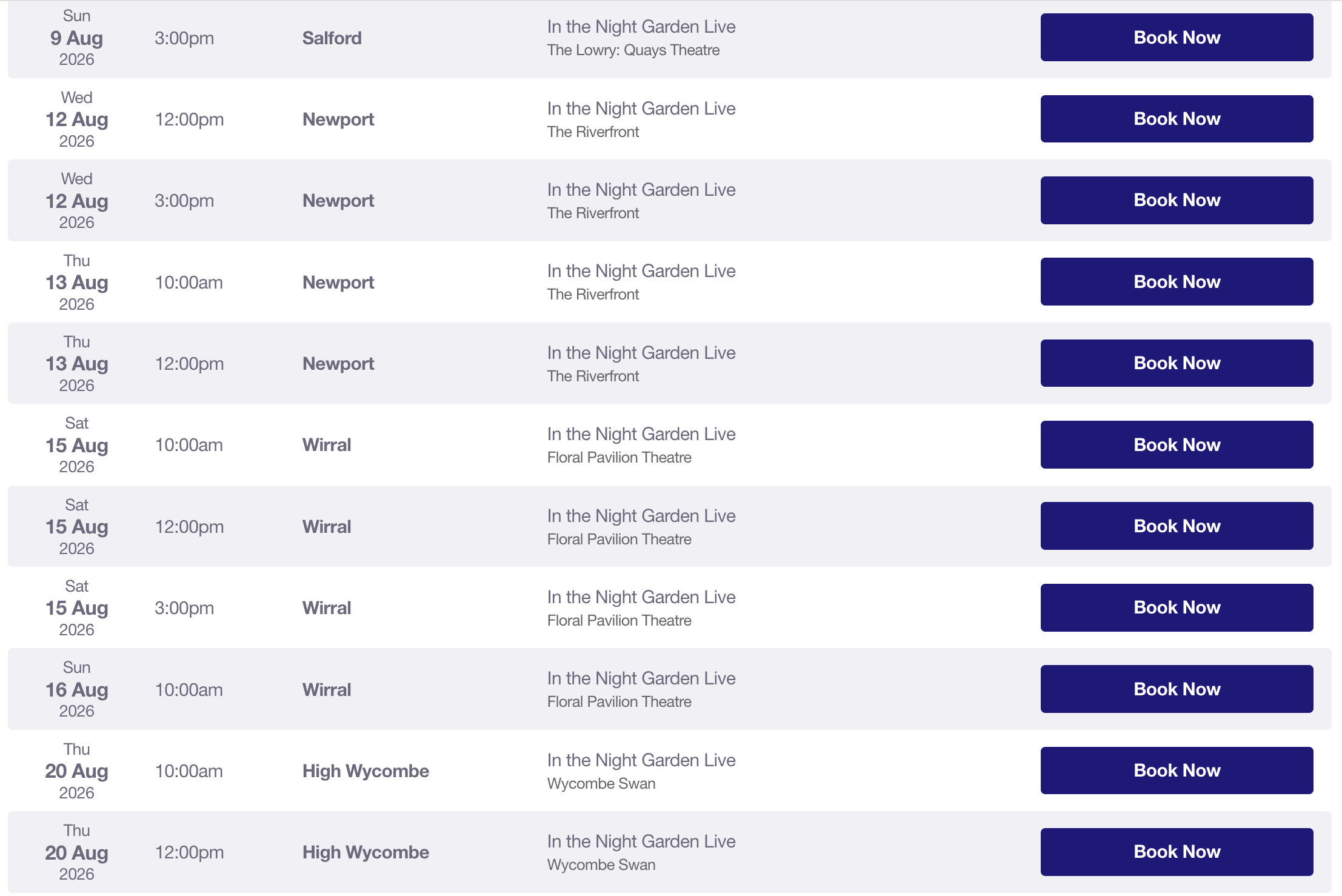
Family Tickets tours extensively across the UK with recognisable family shows like In the Night Garden Live, Peppa Pig's Big Family Show and The Gruffalo. Their brand is synonymous with quality family entertainment, and over the years they've built a rich database of family bookers: verified buyers whose reviews capture not just a star rating but the child's age, why they came, and what made the day.
Tour pages often link out to a patchwork of individual venue websites - a jarring experience for anyone browsing nearby venues. Selling their own allocations lets Family Tickets keep the majority of tour dates within the same trusted, branded checkout. As we’ve previously outlined, traditionally this comes with an administrative cost.
Reach removes that cost. API connections into partner venues mean Family Tickets can sell from live venue inventory - no allocations to manage, no administrative overhead - while keeping every transaction inside a consistent, speedy Family Tickets checkout experience. Whatever the show, wherever the city: their pricing, their promotional layer.
The Thread That Connects All Three
Different use cases, but the same underlying ticket distribution technology powering them. In each case, the seller is no longer constrained by which ticketing system holds the inventory. They connect to it and sell through their own checkout. The venue keeps their system of record and more tickets are sold.
Reach is not a standalone product, it is an extension of what Line-Up already does. A seller using Reach is running a full Line-Up commerce platform - box office, ancillary sales, marketing tools, reporting - and Reach adds the ability to source inventory from other systems into that platform. Primary inventory and Reach inventory sit alongside each other, behave identically, and sell through one checkout. The complexity underneath is invisible to everyone, including the customer.
Posts one and two in this series made the case that live entertainment ticketing has a distribution problem, and described what a proper solution needed to do. These three examples are what it looks like when that solution is working.
If you operate a venue group, produce a tour, or sell tickets for shows you don't run, Reach can help. Book a call, tell us about the inventory you'd like to connect, and we'll show you what's possible.
Find out more at Reach by Line-Up
Read Post 1: The Problem with Ticket Distribution Today →
Read Post 2: How a Ticket Distribution Platform Should Work →
Conclusion