What UK Arts Audiences Want from Membership


What does membership mean today? Are people joining as members of your venue because they love what you do, because the perks are good… or because they forgot to cancel the direct debit?
We talk a lot in our industry about loyalty, belonging, and audience relationships. But the way people spend their time and money has changed. Membership programmes have been a cornerstone of cultural loyalty for decades. But where do they fit in a world where we can now subscribe to a myriad of products and services?
From the gym to streaming services and cinema passes, Patreon creators to Podcast exclusives, coffee memberships to beauty box subscriptions, even toilet roll and cleaning products. Memberships and subscriptions are everywhere.
Despite the cost of living squeeze hitting households across the UK, younger generations are still signalling that they value experiences more than material items. Research from Barclays shows that around 29% of Gen Z respondents say they plan to prioritise spending on "fun and memorable experiences" over the next three years.
Meanwhile, UK consumer spend data indicate that spending on entertainment and experiences is growing faster than spending on physical goods.
So when our audiences "join" a membership scheme, what are they really joining and why? Is it identity? Access? Community? A set of perks?
What did Membership Matters find?
Membership Matters ran from December 2025 to February 2026, asking UK arts audiences and organisations what membership is for. Four findings stand out:
- Membership can be confusing for audiences. Schemes often have several tiers, a wide range of names and prices of up to £10k a year.
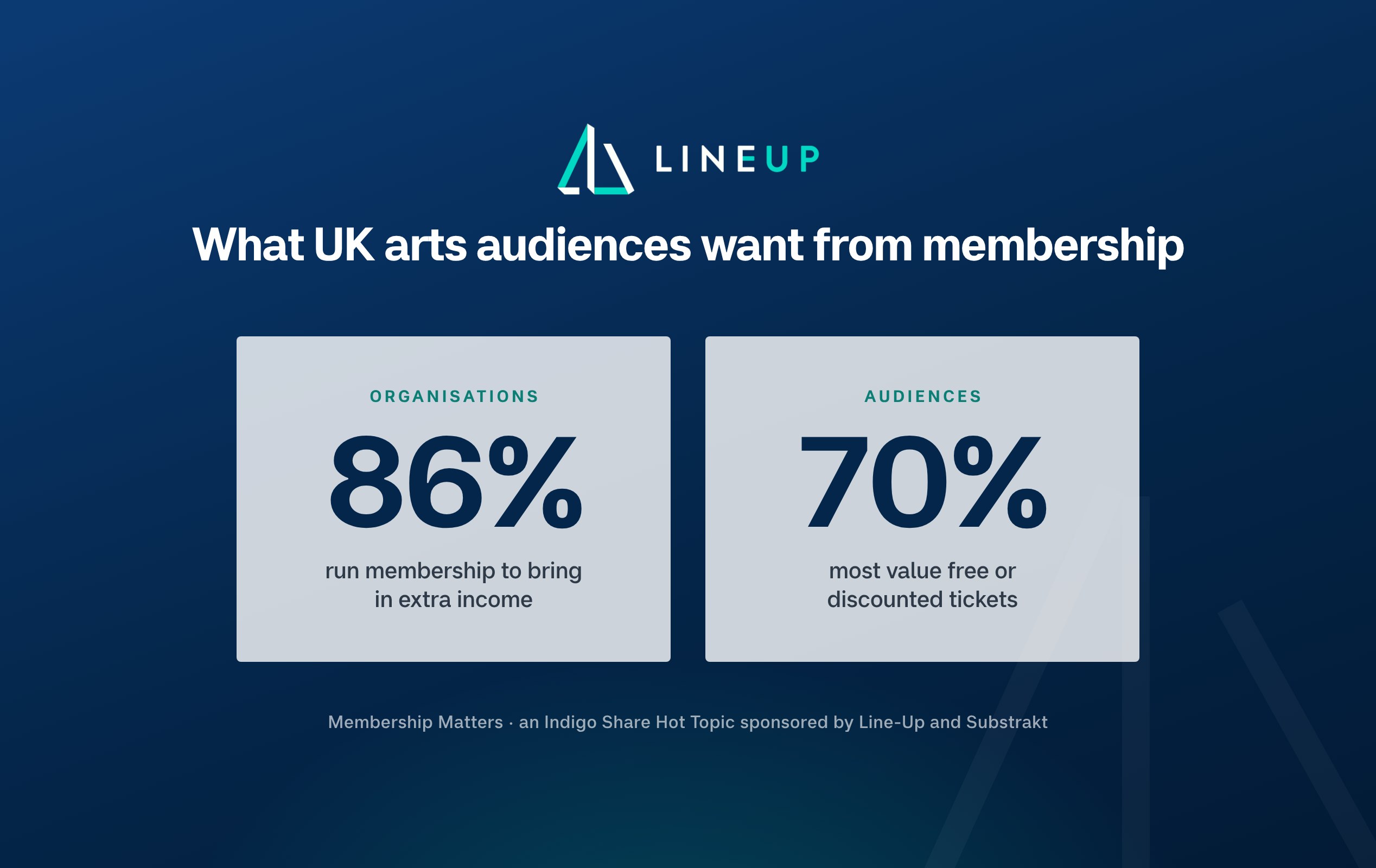
- Organisations and audiences want different things. 86% of organisations run membership to bring in extra income, but 70% of audiences say free or discounted tickets are what they'd value most.
- Organisations are aiming for closer relationships. 71% want membership to encourage philanthropic giving, and many offer member-only events (72%) and exclusive communications (70%).
- The hardest benefits to deliver matter least to audiences. Member events and bespoke communications take the most staff time, yet audiences rank them low. Almost half of organisations say a lack of internal resource is one of their biggest challenges.
Read the Membership Matters report →
What was Membership Matters?
I approached Katy and Kerry asking if there was any data from their research around audience motivations for memberships. Out of that conversation the Indigo Share Hot Topic: Membership Matters research project was born. Alongside our co-sponsors, Substrakt, we set out to explore what membership means for UK arts audiences today. We asked audiences directly - people aged 16+ from all backgrounds - what and why they join, and what they expect from their membership. Many of us involved might have imagined we had most of the answers, but it was time to test some assumptions.
"Everyone is rethinking membership right now - but organisations should not have to do that in isolation. This shared dataset will give us the evidence and confidence to evolve membership in ways that audiences genuinely value. The more organisations that take part, the stronger and more actionable the insights will be."
Katy Raines, CEO and Co-Founder, Indigo
Behavioural economics tells us people rarely make decisions based purely on logic.
We join things because they:
- Make us feel connected
- Help us behave the way we wish we did (hello, gym)
- Reduce hassle or costs
- Signal something about who we are
- Give us access, status or discounts
But in a cost of living crisis, does that shift? Are people cutting back on recurring donations or memberships? Or do they cling more tightly to what brings a sense of community and joy? Has subscription fatigue started to bite? Or do people still find room in their budgets for the experiences that matter most?
That's what we set out to find out. The research explored membership behaviour everywhere, not just in theatres and museums, including:
- Philanthropic models vs purely transactional benefits
- Unlimited access vs flexible usage vs discount-based models
- Community and belonging vs perks and exclusivity
- What loyalty feels like to audiences
- The gap between what's offered and what is actually valued
We were also curious about what we could learn globally, especially from North American models where loyalty, philanthropy and VIP experiences often sit much closer together.
Because maybe cultural memberships are still great for one group of superfans… but what about first timers or occasional attenders? Do they even know what membership is?
Who took part?
Membership Matters ran from December 2025 to February 2026 and was open for free to any UK performing arts organisation. More than 60 organisations took part across two surveys - thank you to everyone who did.
Participating organisations received:
- An in-depth report outlining our findings
- A national benchmark to understand where their membership scheme fits
- Practical findings tied to motivations, service expectations and loyalty behaviours
- A voice in shaping the future of memberships in our sector
What does this mean for Line-Up's membership tools?
We are developing membership and donation tools on the Line-Up platform, and we backed this research so we could build them responsibly - by listening first, understanding real motivations, prioritising flexibility and creating tools that audiences actually enjoy using.
"User-centred design starts with listening. Before we release new membership and donation tools, we want real evidence of what audiences value - not what systems or legacy processes tell them they should value."
Chris Crossley, COO, Line-Up
Signing up is just the start, loyalty is built in every interaction afterwards. The same is true for any kind of consumer relationship.
Across everyday life, people expect memberships to flex with real life. That can include:
- Pausing when life gets busy
- Upgrade or downgrade when needs change
- Managing household members or adding a guest
- Exchanging tickets or upgrading experiences online
- Seeing the impact of their charitable contributions
- Mobile-first self-management
Audiences have learned these behaviours from airlines, gyms, streaming services, railcards, hotel and loyalty apps. Audiences bring those expectations with them, we're not exempt from those expectations.
The findings confirm that membership tools need to be simple for audiences to understand and light for teams to run. That's the approach we're taking as we build them. And whilst this insight guides our roadmap, we also want to invest in knowledge that the whole sector can act on.
What happens next?
We believe membership still has the power to make audiences feel seen, valued and connected. And we want to build the right tools to help support you to do that.
If you'd like to talk about the findings or how Line-Up is building membership tools, I'd love to hear from you.
Read the Membership Matters report.
You can email me here.
Conclusion